

How to Organize a Bedroom for Better Sleep and Less Clutter
A well-organized bedroom supports deeper sleep and reduces daily stress. Small changes—what you store, where you store it, and how you route daily tasks—make a big difference to how restful your room feels.
This guide gives a practical, step-by-step plan to declutter, set up smart storage, and create a sleep-promoting layout using items and organizers you can buy or DIY. Where relevant, we point to useful storage categories and products to speed the process.
1. Start with a focused declutter session
Begin by removing everything that doesn’t belong in the bedroom: dishes, pieces of paperwork, workout gear, and electronics you don’t use before bed. Sort into keep, donate, recycle, and relocate piles. Use clear containers or open baskets so you can see what’s inside—this prevents shoving and forgetting.
If you need quick, flexible containers for sorting and short-term storage, consider simple storage bins & baskets that fit shelves and closets and keep items visible but contained.
2. Simplify the closet and shoe areas
Closets become clutter magnets without structure. Remove off-season items and donate anything you haven’t worn in a year. Add dedicated zones: tops, bottoms, outerwear, and accessories. For shoes, use vertical solutions or slim cabinets to keep footwear off the floor and reduce visual clutter.
For compact, entry-level shoe solutions that work well inside or next to a closet, browse targeted shoe storage & organizers to choose racks, cubbies, or slim cabinets that match your footprint.
3. Make laundry easy and invisible
A clutter-free bedroom has a laundry habit that’s simple and contained. Use a single basket for dirty clothes, and empty it on a set day each week to avoid piles. Keep a small spot for quick fixes—stain remover, a lint roller, and spare hangers—so you can handle minor tasks without bulldozing the whole room.
To keep laundry tools tidy and out of sight yet accessible, check options under laundry storage & organizers for hampers, sorting bins, and countertop containers designed for bedrooms and laundry rooms.
4. Optimize drawers and nightstand surfaces
Overfilled drawers make it hard to find essentials. Empty one drawer at a time, sort contents, and return only what’s necessary. Use modular trays to separate socks, underwear, jewelry, and tech cords so each item has a home.
For drawer-specific organization that fits dressers and bedside tables, consider a set of drawer organizers which prevent small items from mixing and make drawers easier to maintain.
5. Use under-bed storage smartly
The space under the bed is prime real estate for seasonal items, extra bedding, and shoes—if kept neat. Choose low-profile containers that slide easily and have clear tops or labels so you can identify contents without dragging everything out.
Explore the category of under bed storage for sizing options, or pick a specific low-profile model like the practical 4-inch low-profile under-bed storage drawers for slim frames and easy access. Label each drawer by season or item group to avoid rediscovery chaos.
6. Add vertical storage and open shelving
Bedrooms with limited floor space benefit from vertical storage. Shelves and racks keep items off the floor and create a tidy display zone. Use closed baskets on shelves to hide clutter while preserving accessibility.
If you want sturdy, multipurpose solutions that work beside a wardrobe or over a desk, check shelving & storage racks that accommodate baskets, folded linens, and decorative items to reduce visual mess.
7. Reduce nighttime distractions and create a calming layout
A tidy layout supports sleep. Keep electronics off the bedside surface or in a drawer to limit blue light and mental clutter. Reserve the bed for rest—avoid turning it into a work or storage surface. Position storage so daily-launch items (bag, keys, shoes) are grouped near the door to streamline routines.
Small organization products and gadgets designed for easy nightly routines can help—look for simple hooks, trays, or bedside boxes that collect essentials without adding clutter.
Checklist: Quick wins to implement today
- Clear the nightstand of nonessentials; leave only a lamp, a book, and a glass of water.
- Sort a single drawer or closet section in 20–30 minutes—donate what you don’t use.
- Place shoes in a designated organizer rather than the floor.
- Store seasonal items under the bed in labeled low-profile bins.
- Use baskets on shelves to hide small clutter and keep surfaces clear.
- Set a weekly laundry rhythm and keep a hamper in one spot.
FAQ
- How often should I declutter my bedroom? Aim for a mini-session monthly and a deeper purge every season—this keeps accumulation manageable.
- What’s the best way to store bedding and extra pillows? Fold and label by season, then store in under-bed bins or on high shelves in breathable storage baskets.
- How do I keep my nightstand from filling up again? Limit the number of items allowed on the surface and use a single small tray or drawer organizer for essentials.
- Can I keep a small workspace in my bedroom without harming sleep? Yes—keep work items boxed when not in use and maintain a clear physical boundary between work and rest areas.
- What if I don’t have closet space? Use vertical shelving, freestanding racks, or a slim shoe cabinet to reclaim storage without taking much floor space.
Conclusion: One practical change to start with
Pick one zone—closet, bedside, drawers, or under-bed—and spend 30–60 minutes decluttering and adding one targeted organizer. Small, consistent steps reduce visual noise and make sleep more accessible. When items have homes and routines are simple, the bedroom becomes a calm, clutter-free place to rest.
Products Featured in This Article
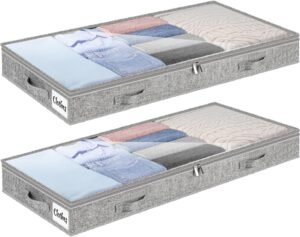
4 Inch Low Profile Under Bed Storag…
Product description Add to Cart Add to Cart Add to Cart Add to Cart Add to…