
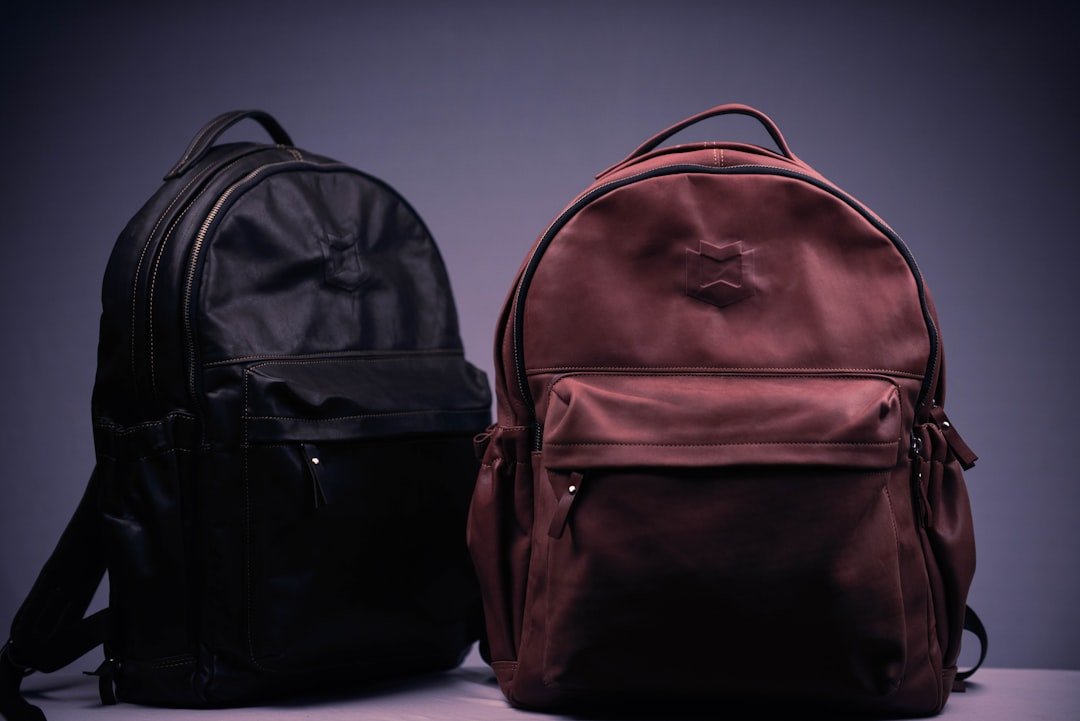
How to Choose the Right Backpack Size for Your Needs
Picking the right backpack size is one of the best ways to make sure your daily commute, school day, or trip goes smoothly. Too small and you’re constantly shoving items in; too large and you carry dead weight. This guide walks you through practical steps to match backpack volume and design to real-life needs.
Below you’ll find clear rules of thumb for liters and capacity, how activities change your choice, fit and comfort pointers, packing strategies, home storage tips, a quick checklist, and answers to common sizing questions.
Understand backpack capacity: liters explained
Backpack capacity is measured in liters — that number tells you internal volume, not how many items fit. Typical ranges:
- 10–20 L: slim daypacks for essentials
- 20–30 L: most commuter, school, and everyday packs
- 30–50 L: weekend travel and overnight hiking
- 50+ L: multi-day treks or heavy gear
For reference, a popular commuter option is the Carhartt Classic 25L Backpack, which demonstrates how 25L is usually enough for a laptop, lunch, a light jacket, and a few extras.
Match size to activity: quick recommendations
Base your choice on what you carry daily and how you travel:
- Daily commute or school: 20–30 L — room for laptop, notebooks, water bottle.
- Work with gear (photography, fieldwork): 25–35 L or a specialized pack with modular pockets.
- Day hikes: 20–30 L for water, layers, snacks.
- Weekend trips: 30–50 L if you want to carry clothing and toiletries without checked luggage.
If you want streamlined choices for routine use, browse curated options in the Everyday Backpacks category to compare typical sizes and layouts suited to commuting and school.
Sizing for laptops and tech: measure before you buy
If you carry a laptop, always check the internal laptop sleeve dimensions rather than trusting the total liters. Laptop sleeves are commonly listed by maximum diagonal (13″, 15.6″, etc.). Measure the height, width, and thickness of your device and compare.
For more structured tech-friendly backpacks and models designed around device protection, review the Laptop Backpacks collection — these products often list sleeve dimensions, padding, and ports so you can match size and functionality reliably.
Packing smart: get more from your chosen volume
How you pack can effectively increase usable space. Use compression, packing cubes, and rolling techniques to maximize capacity and keep items accessible.
- Compress bulky items (jackets, sweaters) into compression cubes or straps.
- Use a dedicated cube for dirty clothes to prevent moisture transfer and keep organization clear.
- Place heavier items close to your back and near the middle of the pack for balance.
Compression packing cubes are a practical upgrade — consider proven options like the BAGSMART Compression Packing Cubes to reduce bulk and separate categories of items.
For a wider selection of packing solutions and organizers that pair with backpacks, explore the Travel Organizers & Packing Cubes category to find sizes that match your bag and trip length.
Choosing a travel backpack: carry-on and multi-day planning
If you travel by air or transit often, pick a size that fits carry-on rules if you prefer to avoid checked luggage. Many airlines accept 40–45 L travel backpacks as carry-ons when they compress well and have a streamlined shape.
For trips where you need more gear but still want a backpack, look for models with expandable compartments or convertible duffel/backpack designs. For packing light and planning around carry-on constraints, start with a travel-specific selection—see examples in the Travel Backpacks category for carry-on-friendly layouts and capacity options.
Fit and comfort: torso length, straps, and load distribution
Fit is as important as volume. Two people with the same torso length can prefer different strap geometry, so testing is best. Key fit factors:
- Torso length — measure from C7 vertebra to the top of the hip bone and compare to manufacturer specs.
- Hip belt — transfers weight to hips; critical for packs >15–20 kg or >30 L on hikes.
- Sternum strap and load lifters — stabilize the pack while moving.
- Padded shoulder straps and breathable back panels — improve comfort for daily and travel use.
If you want a model built for travel with airplane-approval and dedicated laptop protection, check product examples like the Taygeer Travel Laptop Backpack which illustrates common comfort and layout features for tech-heavy travelers.
Storing and organizing spare backpacks at home
When you own more than one backpack or seasonal bags, proper storage prevents damage and keeps your space tidy. Use breathable covers for long-term storage, and store under beds or in closets to save floorspace.
For compact storage solutions that fit under a bed or in limited closet space, the Under Bed Storage category has options that protect bags and gear while keeping them accessible for your next trip.
Checklist: Picking the right backpack size
- List everything you carry on a typical day or trip.
- Measure the largest items (laptop, coat, camera) and check internal dimensions.
- Choose liters based on activity: 20–30 L for daily use, 30–50 L for short trips, 50+ L for multi-day trips.
- Confirm fit: torso length, hip belt, adjustability, and padding.
- Decide whether you need specialized compartments (laptop, hydration, camera).
- Plan packing: get packing cubes or compression bags if you need to maximize space.
- Test with a loaded pack before committing — comfort under load matters most.
FAQ
- How do I measure my torso length? Feel for the C7 vertebra at the base of your neck, then measure down to the top of your hip bone (iliac crest). Compare that length to the pack’s torso size chart.
- Is a 30L backpack big enough for travel? Yes for minimalist weekend trips or carry-on-focused travelers. Use packing cubes and plan outfits to stay within 30L.
- What size backpack for a laptop and gym clothes? 20–30 L usually fits a laptop, a change of clothes, and basic gym gear without excess bulk.
- Should I get a backpack with a hip belt for commuting? For light daily loads under 8–10 kg, a hip belt isn’t necessary, but it improves comfort if you routinely carry heavier items.
- Can I change backpack size later if needs change? Yes — many people start with a 20–25 L and upgrade to 30–40 L for travel or specific hobbies. Store unused bags safely to prolong life.
Conclusion — practical takeaway
Choose a backpack by matching liters to your typical load, confirm fit and laptop dimensions, and use smart packing to stretch capacity. Start with the checklist above, test a loaded pack for comfort, and pick organizers that complement your chosen size.
Products Featured in This Article
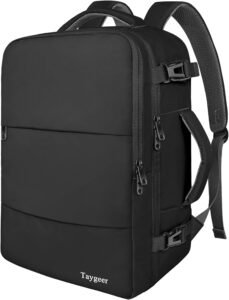
Taygeer Travel Laptop Backpack for …
From the brand About Taygeer Taygeer has always adhered to the concept of improving the quality…
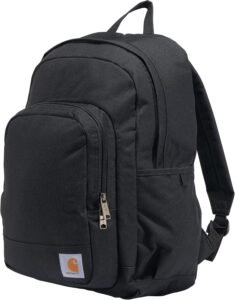
Carhartt Classic 25L Backpack Black
Looking for a travel backpack that holds up on the road and in real life? The…
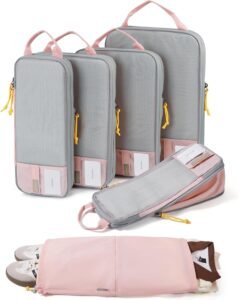
BAGSMART Compression Packing Cubes …
BAGSMART 6 Set/4 Set/2 Set Compression Packing Cubes for Travel, Lightweight Vacation Travel Essentials, Travel Accessories…